Timing belts form an important part of contemporary machinery, and they are charged with the responsibility of coordinating the motion of the shafts and providing proper transmission of power. The choice of a timing belt will involve, among other things, the choice of an Open Ended Timing Belt or a closed-loop belt. They are both of a particular use and have particular benefits; thus, it is necessary to know their peculiarities, uses, and limitations before choosing one of them.
Open-Ended Timing Belts
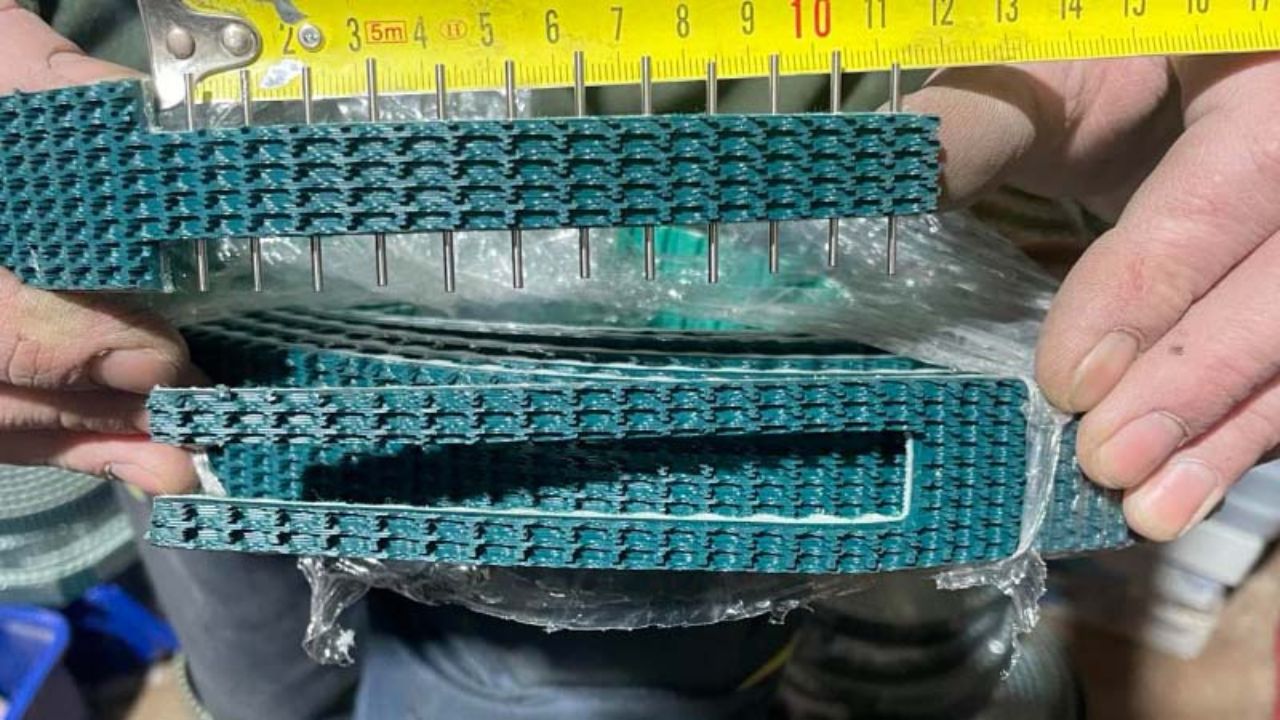
The name open-ended timing belts implies that these belts have no loops. These belts come in a certain length and are normally fitted together, either with the help of mechanical connectors, clamps, or splicing methods, after they are fitted. Open-ended belts are used to offer flexibility in instances where the regular closed-loop belts cannot be used due to out-of-shape center distance or a unique machine layout. They find application in conveyors, long machinery systems, or special equipment where a continuous belt cannot be installed in one piece.
A major benefit of the open-ended timing belts is that they can accommodate non-standard lengths. These belts are manufactured in very specific lengths based on the specifications of the properties of the machinery, and hence can be easily fitted in the customized or unique equipment. Also, the open-ended belts are interchangeable in some parts, and this could cut on maintenance expenses in specific industrial systems. Nevertheless, the junctions between the belts may become a potential source of weakness in case they are not attached properly, and merged belts can demonstrate a reduced tensile strength in relation to closed-loop belts.
Learning About Closed Timing Belts
Closed timing belts (also called continuous belts) are produced in the form of a continuous loop. This kind of belt is where a consistent strength is applied along the whole length, and therefore, mechanical splices or joints are not required. Closed belts are typically used in high-precision equipment, car usage, and in any type of equipment where timing and tension are important. The smooth design ensures that the weak point does not exist in the belt, which has better durability and reliability in the process of continuous working.
Timing belts are also offered as closed with different materials, such as polyurethane, reinforced rubber, commonly with additional reinforcement of steel, Kevlar, or fiberglass cords. The belts are specifically designed to suit high-speed applications, low levels of vibration, and accurate phase match of moving parts. The maintenance is usually simple because the belts are made to last long and require the least adjustments on installation.
Performance and Applications Comparison
When choosing the use of an open-ended timing belt or a closed timing belt, the consideration should be on the performance requirements and the conditions the belt will be used in. Belts that are open-ended are versatile and flexible, which is why they can be used with custom machinery, long conveyors, and irregularly configured equipment. They can be easily reshaped in length and repaired, and due caution needs to be exercised on the integrity of mechanical joints to ensure early wear or separation.
Environmental Factors and Maintenance
The decision in regards to the use of open-ended and closed belts also depends on environmental factors. An open-ended belt can be more fitting where the belt should be taken off or adjusted regularly, like in a testing configuration or variable-length conveyor. Closed belts, in their turn, are better suited to controlled settings, where they can sustain tension and alignment and are not easily interfered with.
Even the maintenance of the two types of belts varies. Belts that are open-ended should be checked on a regular basis at the joint points to make sure that the connections are firm and undamaged. Wear and misalignment or slip-like symptoms must also be dealt with at the earliest instance so as to avoid loss. Closed belts normally need less regular maintenance, since the continuous construction spreads the stress evenly over the belt, and local stress is lessened.
Conclusion
The decision between open-ended and closed timing belts is based on the demands of the machinery and the conditions of use. Open-ended belts offer flexibility and ease of replacement in custom or variable length usage, whereas the closed timing belts offer better durability, accuracy, and predictable performance to high-speed or high-precision machinery. The knowledge of the design, performance, and maintenance requirements will enable the engineers and machinery operators to choose the best timing belt that will guarantee good performance, reduced downtime, and long equipment life. Finally, the decision must be made with regard to the functional needs of the machinery and the working conditions to ensure that it is the most efficient and has the best durability.